Thursday, 3 March 2016

Costume Research

Costume Research 

It is important that we ensure that the two characters first shown are not presented as heroes, as it is safe to assume that they were involved
in a misdeed in order to get the bounty in the first place. It is assumed that these characters are not high ranking, but rather the opposite, they are lowly criminals. However, in saying this, it is important that they are distinguished quite easily from the anonymous assailant, as he is shown to be better dressed, clearly of a higher class than those he is following. It is important for us, then, that he is distinguishable from the others upon first glance, which is completely influenced by the clothing which he wears.
Headwear
As was typical of the time setting, all characters will be wearing a hat, Stetson-style. Some examples of possible hats are included below.
                                                                                         
Facewear
As in true Western style, we wanted to outfit our assailant with a bandana, to obscure a large portion of his face.
Coats/Outerwear


Wednesday, 3 February 2016

Westerns | Target Audience

1. Who are the target audiences for Westerns? How do films in this genre attract their target audience? 

The target audience for Westerns is a very wide market indeed. Due to the vast amount of Westerns produced during the 40s, 50s and 60s, it could be argued that Westerns were produced solely for their time period. However, if that were the case, films like The Assassination of Jesse James by the Coward Robert Ford, The Proposition and Slow West simply would not exist. It is, therefore, important to take this into consideration when assessing the target audience for films of the Western genre. The first group of people one would cast their mind to when Westerns come into conversations are males. This is due to the intense Macho-Manliness which is displayed in each of the daring heroes and villains that grace the character lists of many westerns. Men are seen wearing dusters, carrying pistols and riding horses, which all factor into the appeal for males when watching. Westerns are also intended for a more mature audience than that of other film genres. This is due, in part, to the sometimes excessive violence used in the actual film (see Django (1966) ) but mostly it is down to the recurring themes which are present in the genre - High Noon's theme of bravery and duty in the face of adversity, as well as Django Unchained for its themes and graphic depiction of slavery in 1800s America come to mind when thinking of themes present in Western films.

2. What Type of Company Distributes Your Chosen Films?

Two words come to mind when thinking of Distributors of Western films, especially that of those deemed Essential or Classics of the genre - United Artists. United Artists, having many of the major films of the Western Genre under its belt, has distributed such classics as The Good, The Bad and The Ugly, High Noon and Unforgiven. It is clear they have a lot of experience dealing with classic Westerns.
However, The Weinstein Company, a break-off company formed by the Weinstein Brothers after leaing Miramax, has continually worked with director Quentin Tarantino, particularly during his "Western Craze" with films like Django Unchained and The Hateful Eight.

3. How have social groups been represented? How does this relate to the Target Audience?
While Westerns may be America's main form of historical expression in film, it does not mean that every Western has glorified the past of the United States. The aforementioned Django Unchained fully indulges in the idea of racial abuse via slavery, a sore subject for most Americans in their country's illustrious past. This would resonate with the audience, particularly that in the UNited States, and would have generated discussion about a subject that is arguably largely ignored. However, it is not just the Black Slaves which are exposed in Westerns. They can also expose the bias and hatred against the Native Americans, "Injuns" as they are often referred to in the films.


4.  What are Audience's Expectations of these Films?

The audience's expectations of a Western ultimately comes down to the experiences they have had with the previous films of the genre they have seen. Despite this, however, it is certainly true that Westerns have developed a certain iconography over time. This iconography undoubtedly affects the audience's expectations of the films of the Western Genre.


Tuesday, 26 January 2016

Example of Target Audience | Django Unchained

Django Unchained

1. Look at the target audience for the film and how each film attracted their target audience.

Target Audience

When Quentin Tarantino's Django Unchained was released in 2012, it was given an "18" certificate in the UK by the BBFC as a result of the film's graphic scenes and frequent swearing, in particular the repeated use of the "N-word". Hence, it can be deduced that the film was created for those of 18+, which constitutes the majority of the film-viewers in our society. It goes without mention, then, that Tarantino did not create Django Unchained for a childhood and adolescent audience, as such young viewers would find not only the graphic violence and swearing Tarantino is known for unsettling, but would have also been disturbed by the film's subject matter following an escaped slave in 1800s America. Thirdly, the fact that Quentin Tarantino is such a revered filmmaker meant that his devoted fans would have been attracted to watching his latest venture into the director's seat. 

How Did It Attract Its Target Audience?

Django Unchained was marketed for what it was, but it was done so in a clever way. As is evident from the first official poster (see below), it marketed itself to those who were prepared to think about what they were watching. This was done by the exclusion of the actual title of the film on the poster, opting instead for a more minimalist design that packed a massive statement. Also, the use of the red on the poster is an allusion to bloodshed and violence, which denotes one of the main themes of the movie. The poster, whilst intentionally leaving the film title out, purposely enhances the director's credit. This would have enticed those established fans of Quentin Tarantino to see the movie. 


2. What Type of Company Distributes the Film?

Django Unchained was distributed by The Weinstein Company. This company formed by Bob and Harvery Weinstein in 2005 is known for working alongside Quentin Tarantino's other films from the founding of the company on. 

Monday, 25 January 2016

Film Openings Analysis Timings #2 | Butch Cassidy and the Sundance Kid


Timings

00:00 - 00:08 = 20th Century Fox Logo and Music Begins

             00:09 = Paul Newman Credit and Graphic

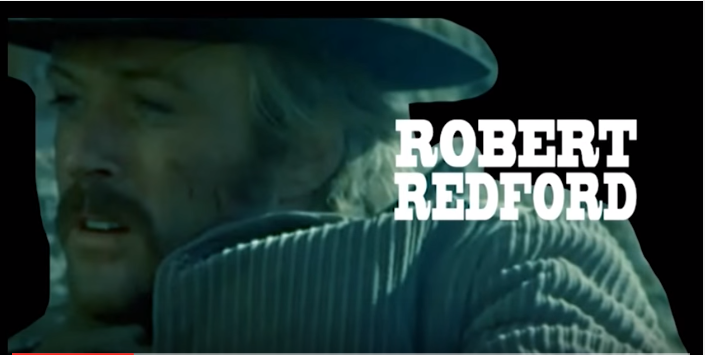
             00:20 = Robert Redford Credit and Graphic 

             00:36 = Katharine Ross Credit and Graphic

             00:48 = General Production Credits

             00:52 = Main Titles


             01:00 = Co-starring 


             01:12 = Music Composition

             01:17 = Singing Credits

             01:24 = Costumes and D.o.P

             01:29 = Art Direction and Set Decoration

             01:32 = Editor and Unit Production Manager

             01:37 = Assistant Director and Sound

             01:41 = Orchestration and Graphic Montage


             01:45 = Make-up and Hairstyling

             01:50 = Second Unit Director and Second Unit Photography


             01:55 = Executive Producer

             01:57 = Writer 

             02:02 = Producer


             02:06 = Director

             02:11 = Spanish Credits.


END


Film Openings Analysis Timing #1 | Django Unchained (2012)

]

Timings


00:00 - 00:02 = Columbia Title Screen

            00:04 = Theme Song Begins and Production Company Logo 


            00:08 = Director 

00:12 - 00:33 = Main Actors

00:33 = Camera begins to pan for first time

00:40 - 00:45 = Main Title appears

            01: 12 = Camera Cuts to different setting

00:45 - 01:11 = "Co-Starring" Credits Shown

01:12 - 01:22 = No credits are shown

01:23 - 01:33 = "Co-starring" Credits resume

            01:35 = Appreciation  to Franco Nero

            01:42 = 'Django' Main Theme Credits

            01:45 = Casting Director

            01:47 = Editor

            01:52 = Original Song


01:58 - 02:08 = Executive Producers


            02:09 = Cut to nighttime 

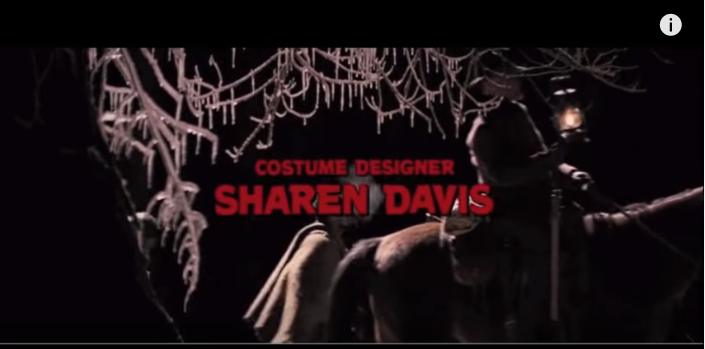
            02:10 = Costume Designer

            02:18 = Production Designer

            02:27 = Director of Photography

            02:42 = Producers


END