Wednesday, 3 February 2016

Westerns | Target Audience

1. Who are the target audiences for Westerns? How do films in this genre attract their target audience? 

The target audience for Westerns is a very wide market indeed. Due to the vast amount of Westerns produced during the 40s, 50s and 60s, it could be argued that Westerns were produced solely for their time period. However, if that were the case, films like The Assassination of Jesse James by the Coward Robert Ford, The Proposition and Slow West simply would not exist. It is, therefore, important to take this into consideration when assessing the target audience for films of the Western genre. The first group of people one would cast their mind to when Westerns come into conversations are males. This is due to the intense Macho-Manliness which is displayed in each of the daring heroes and villains that grace the character lists of many westerns. Men are seen wearing dusters, carrying pistols and riding horses, which all factor into the appeal for males when watching. Westerns are also intended for a more mature audience than that of other film genres. This is due, in part, to the sometimes excessive violence used in the actual film (see Django (1966) ) but mostly it is down to the recurring themes which are present in the genre - High Noon's theme of bravery and duty in the face of adversity, as well as Django Unchained for its themes and graphic depiction of slavery in 1800s America come to mind when thinking of themes present in Western films.

2. What Type of Company Distributes Your Chosen Films?

Two words come to mind when thinking of Distributors of Western films, especially that of those deemed Essential or Classics of the genre - United Artists. United Artists, having many of the major films of the Western Genre under its belt, has distributed such classics as The Good, The Bad and The Ugly, High Noon and Unforgiven. It is clear they have a lot of experience dealing with classic Westerns.
However, The Weinstein Company, a break-off company formed by the Weinstein Brothers after leaing Miramax, has continually worked with director Quentin Tarantino, particularly during his "Western Craze" with films like Django Unchained and The Hateful Eight.

3. How have social groups been represented? How does this relate to the Target Audience?
While Westerns may be America's main form of historical expression in film, it does not mean that every Western has glorified the past of the United States. The aforementioned Django Unchained fully indulges in the idea of racial abuse via slavery, a sore subject for most Americans in their country's illustrious past. This would resonate with the audience, particularly that in the UNited States, and would have generated discussion about a subject that is arguably largely ignored. However, it is not just the Black Slaves which are exposed in Westerns. They can also expose the bias and hatred against the Native Americans, "Injuns" as they are often referred to in the films.


4.  What are Audience's Expectations of these Films?

The audience's expectations of a Western ultimately comes down to the experiences they have had with the previous films of the genre they have seen. Despite this, however, it is certainly true that Westerns have developed a certain iconography over time. This iconography undoubtedly affects the audience's expectations of the films of the Western Genre.


Tuesday, 26 January 2016

Example of Target Audience | Django Unchained

Django Unchained

1. Look at the target audience for the film and how each film attracted their target audience.

Target Audience

When Quentin Tarantino's Django Unchained was released in 2012, it was given an "18" certificate in the UK by the BBFC as a result of the film's graphic scenes and frequent swearing, in particular the repeated use of the "N-word". Hence, it can be deduced that the film was created for those of 18+, which constitutes the majority of the film-viewers in our society. It goes without mention, then, that Tarantino did not create Django Unchained for a childhood and adolescent audience, as such young viewers would find not only the graphic violence and swearing Tarantino is known for unsettling, but would have also been disturbed by the film's subject matter following an escaped slave in 1800s America. Thirdly, the fact that Quentin Tarantino is such a revered filmmaker meant that his devoted fans would have been attracted to watching his latest venture into the director's seat. 

How Did It Attract Its Target Audience?

Django Unchained was marketed for what it was, but it was done so in a clever way. As is evident from the first official poster (see below), it marketed itself to those who were prepared to think about what they were watching. This was done by the exclusion of the actual title of the film on the poster, opting instead for a more minimalist design that packed a massive statement. Also, the use of the red on the poster is an allusion to bloodshed and violence, which denotes one of the main themes of the movie. The poster, whilst intentionally leaving the film title out, purposely enhances the director's credit. This would have enticed those established fans of Quentin Tarantino to see the movie. 


2. What Type of Company Distributes the Film?

Django Unchained was distributed by The Weinstein Company. This company formed by Bob and Harvery Weinstein in 2005 is known for working alongside Quentin Tarantino's other films from the founding of the company on. 

Monday, 25 January 2016

Film Openings Analysis Timings #2 | Butch Cassidy and the Sundance Kid


Timings

00:00 - 00:08 = 20th Century Fox Logo and Music Begins

             00:09 = Paul Newman Credit and Graphic

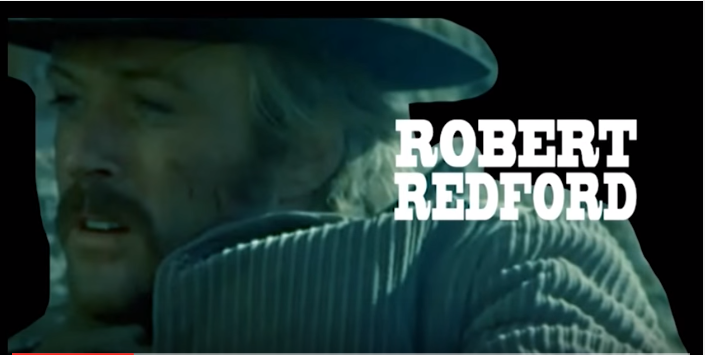
             00:20 = Robert Redford Credit and Graphic 

             00:36 = Katharine Ross Credit and Graphic

             00:48 = General Production Credits

             00:52 = Main Titles


             01:00 = Co-starring 


             01:12 = Music Composition

             01:17 = Singing Credits

             01:24 = Costumes and D.o.P

             01:29 = Art Direction and Set Decoration

             01:32 = Editor and Unit Production Manager

             01:37 = Assistant Director and Sound

             01:41 = Orchestration and Graphic Montage


             01:45 = Make-up and Hairstyling

             01:50 = Second Unit Director and Second Unit Photography


             01:55 = Executive Producer

             01:57 = Writer 

             02:02 = Producer


             02:06 = Director

             02:11 = Spanish Credits.


END


Film Openings Analysis Timing #1 | Django Unchained (2012)

]

Timings


00:00 - 00:02 = Columbia Title Screen

            00:04 = Theme Song Begins and Production Company Logo 


            00:08 = Director 

00:12 - 00:33 = Main Actors

00:33 = Camera begins to pan for first time

00:40 - 00:45 = Main Title appears

            01: 12 = Camera Cuts to different setting

00:45 - 01:11 = "Co-Starring" Credits Shown

01:12 - 01:22 = No credits are shown

01:23 - 01:33 = "Co-starring" Credits resume

            01:35 = Appreciation  to Franco Nero

            01:42 = 'Django' Main Theme Credits

            01:45 = Casting Director

            01:47 = Editor

            01:52 = Original Song


01:58 - 02:08 = Executive Producers


            02:09 = Cut to nighttime 

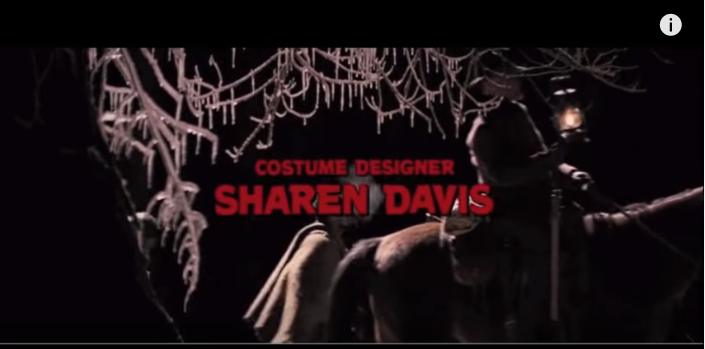
            02:10 = Costume Designer

            02:18 = Production Designer

            02:27 = Director of Photography

            02:42 = Producers


END


Sunday, 24 January 2016

Film Openings Analysis #5 | No Country For Old Men (2007)


Titles

The interesting thing about No Country For Old Men is that after the studio titles and the actual movie title, there are no opening credits. This could have been done for a minimalist effect, which creates a very raw, natural atmosphere in the opening credits. What little credits there are, much like those of Brokeback Mountain, are written in a plain white font, with no serifs or accents. This reinforces the natural and open theme which surrounds the opening credits.

Music

Again, the opening credits of this movie are unique in that instead of having a theme or a score being played over the opening, the Coen brothers have instead opted for another form of non-diagetic sound - a voiceover narration by the main protagonist, played by Tommy Lee Jones. His southern drawl tells the audience that his grandfather and his father were both sheriffs and that he was simply following in the family's footsteps. He then goes on to say how "sheriffs used to never even carry a gun" which illustrates to the audience the changing nature of society and how it is becoming increasingly violent in modern times. This divide and change in society's nature is reinforced through Jones' repeated use of the term "old-timers" and he even says that he wonders how "they would have operated in these times." There is something seemingly cataclysmic/apocalyptic/biblical about how he speaks of the crumbling of society. This is reinforced when he tells us of the man who shot a fourteen year old girl, as he says that it is "his arrest, his testimony", This biblical nature of his speech is further solidified when he says that the criminal had known "he was going to hell," There is an impending finality that is illustrated by the criminal's use of "see you in fifteen minutes".
Jones then tells us of his daily fear of death, but that he understands that he has to be willing to die to even do the job he is doing. He ends on a tone of acceptance with "You just have to say 'OK, I'll be part of this world.' This further reinforces the sense of impending finality that is prevalent in the latter half of the opening scene.
The Coens' decision to not use a soundtrack but instead focus on the words of Jones sets a thoughtful, reflective tone to the introductory scene of the film, and as a result, to the rest of the film that is yet to unfold.

Shot Types/Mise-en-scene

Open, rolling landscaped, establishing long shorts constitute the vast majority of the film's opening. However, the last twenty or so seconds are characterised by a smooth panning shot which moves from the fields and hills to the road, where a criminal is being apprehended, who we are led to believe is Anton Chigurgh. It is at this point Jones' monologue moves onto the segment about accepting that he might die doing his job. At this point, the audience draws the idea of the impending finality, what Jones is saying, and what is onscreen together and a growing sense of dread is created which lasts the entire movie.

Film Openings Analysis #4 | Brokeback Mountain (2005)

Brokeback Mountain is one of my personal favourites. As a huge coming-of-age movie fan, I am exposed to a lot of the same themes, ideas and plots and so when a film comes along and breaks the typical boundaries of the genre, I am willing to give it a watch. In Ang Lee's 2005 understated masterpiece Brokeback Mountain, the coming-of-age tale is between two men, Jack Twist and Ennis Del Mar, upon discovering their new-found love for each other and exploring their broadening sexuality. To further divert from the generic coming-of-age formula, the film is set up as a Western taking place in the 1960s.

Titles

The opening titles of Brokeback Mountain are understated. They are written in a thin, white font overlayed a vast landscape of rolling hills. This could perhaps indicate the openness of the relationship between the two men with each other. However, this could also possess a double meaning - the two men are forced to be 'normal' in their society and to hide their relationship from society. The titles being over the hills is important also as it denotes their importance, and it is in the hills and mountains that the relationship of Jack and Ennis first emerges and subsequently fully develops.

Music

The idea of understatement and simplicity, but also of concealment and normality is further reinforced in the music that plays in the beginning of the opening scene. However, after Ennis arrives, the music stops playing and the only thing that is heard is diagetic sound - from the train, from Jack's truck. This enourages the audience to focus on the characters' first meeting with each other, emphasising the importance of this scene. The silence acts as a tool to bringing these characters together, making the scene seem more 'distantly intimate'.

Shot Types/Mise-en-scene

The opening shot is a long, establishing landscape shot of rolling hills which, as I mentioned before, almost establish the countryside's hills and mountains as a character, which becomes increasingly prevalent throughout the film. The hills and mountains are Jack and Ennis' last safe refuge. They come here to be with each other, it is here where their relationship first tentatively appears, and then develops into a burning love for each other.
What follows is a series of longer shots of Ennis walking alone. He is seen to be quite lonesome, but perhaps contently so. The long shot of Ennis at the door is interrupted by the moving train, whose engines are going at full throttle. This train is perhaps a representative foreshadowing of the unstoppable force that is Ennis' feelings for Jack that will emerge in the future. The harsh noise of the steam engine is a symbol for the disruption that will occur in both men's lives as a result of these feelings they possess for each other.
Just as the train is leaving the shot, Jack approaches it in his beaten-up truck. Both men are wearing a typical mid-western "cowboy" style outfit. Ennis' in suede and Jack's in denim. The differences of their outward appearance is perhaps evocative of their differing personalities, however them having the same style is perhaps representing how they are similar in many ways that are less obvious, and which will be discovered as the two men develop in each other's presence.
The close up of Jack staring off towards Ennis perhaps indicates a natural curiosity and even, perhaps, attraction towards Ennis and the lingering nature of the shot could represent the desire of Jack towards his co-worker. The same goes for Ennis, who is seen casting sideways glances towards Jack. The nature of the glances could perhaps reinforce the idea of concealment and taboo that exists even in the early beginnings of the two men's relationship.
This notion of desire is again reinforced through the close up of the mirror, where Jack is shaving, in which the image of Ennis is reflected. This could emphasise the theme of taboo desire as Jack must resort to indirect, underhand ways of looking at Ennis. Further, the fact that Jack is shaving could perhaps represent how he is beginning to peel away at his exterior and is already beginning to discover a new side of his sexuality that has emerged as a result of his attraction to his co-worker.


Film Openings Analysis #3 | Django Unchained (2012)


Django Unchained is the 2012 film from seemingly increasingly controversial director Quentin Tarantino. It tells the story of the eponymous character, a slave in the Southern states of America. The opening scene is, as with the rest of the film, highly memorable.


Titles

The opening titles are written in a  red, pulpy font reminiscent of the Spaghetti Westerns of Sergio Leone. The red in the titles evoke the image of blood which is juxtaposed over scenes which depict a slavedriver transporting his slaves like livestock across a barren desert. The audience is, even if subconsciously, made aware that blood will be spilled, but who's is the question on their minds?

Music

The music element of the opening scene adds an important dimension to them. Tarantino has opted to use the title theme from Franco Nero's 1966 film Django. By doing this, he again evokes the image of the Spaghetti Western, a recurring theme in the opening scene. The music sings of  hope and redemption - "After the shower, the sun." - by doing this, and combining this with what is on-screen at this point gives the audience a good idea that the titular character will be getting his revenge on those white slavedrives that dare enslave him. However, much simpler than that, the musical choice on Tarantino's behalf is also a simple reference to the original Django and its fans that might be watching his film.

Shot Types/Mise-en-scene

The film opens with the titles overlaying a shot of rocks, each identical in every way. The camera then pans down to the black slaves being herded like animals. This is a heavily political statement being made in the first ten seconds of a film's opening - to be expected of Tarantino by now, though.
The audience is then given a look at a slave's back, scarred heavily from being whipped by his master, the slavedriver. The camera constantly keeps this in focus as a reminder  of what the white man has done to the vulnerable slave. The scars become an important feature later in the film, as we are told through a series of flashbacks Django's backstory.
The camera then shows us a mid shot of the slaves from the front, walking in a row like animals to the slaughterhouse. The faces of each of the slaves are the same - pain, anguish and an overarching desire for justice. These are men being pushed to their very limit. This idea is reinforced when, immediately following this shot is a close up of Django, and the audience can see very clearly the injustice that he has been a victim of which has manifested onto his face.
The audience is given a sense of the scale that this journey has entailed for the slaves through a series of long, establishing shots, and a sense of the passage of a great length of time through the use of a cut which plunges the audience into the darkness of a forest. The slaves are wearing sacks as clothing to cover themselves from the coldness of the night. However, this might be put into perspective when the audience sees that the slavedriver is well wrapped up in warm coats and furs on his horse on which he travels, as well as having a torch as a heat and light source.
The scene ends on the repeated close ups of the slaves, causing the audience to sympathise with them and their situation, which paints them as the victims of the slaverdriver's greed and inhumanity.

Does this film conform to the codes and conventions of the genre?

There is much evidence to suggest that Quentin Tarantino's Django Unchained does indeed conform to the codes and conventions of the Western genre. This claim is evidenced by the fact that it deals with a controversial issue in American past. Slavery is referenced again and again in other westerns, Gone With The Wind.